
What happens between April and July tells you more than any summer forecast.
A practical September prep plan for South Dakota pheasant hunters — dog conditioning in heat, foot care, shooting practice that actually transfers, and the gear worth getting now.
We’re about four weeks from opening day. That’s enough time to get a dog and a shooter into real hunting shape. There is not enough time to start in October and be fully ready for opening day.
Every season we watch the same two things happen. A dog that was fine on day one at 8 a.m. is completely wore out by the end of the day. And struggling by day two. Next is a hunter who shoots well at the club but misses roosters he should be folding. Both issues are easily resolved. If you start now.
Condition the dog and do it carefully
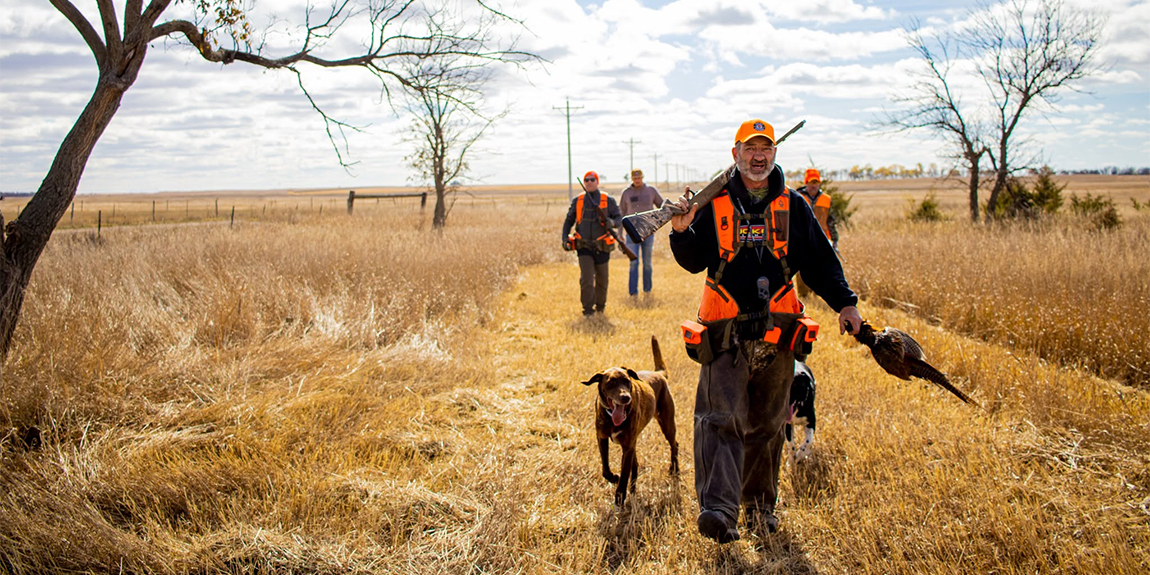
A hunt on our ground means three to five miles of heavy cover per day. Most hunts consist of three days running in cattails, plum thickets, CRP, Creek and River Banks, about anything you can imagine. A dog that’s been in a kennel or a backyard since January physically cannot hold up well.
Here’s the part people get wrong: drive doesn’t save an unconditioned dog. Drive is what gets it hurt. A high-drive dog will run itself into heat stroke or a torn pad before it will quit on you. Your job is to build the engine before the season, because with all the scent and running roosters, the dog is in high gear and desire overrides protecting itself in October.
Build gradually. Start at 20 to 30 minutes of steady trotting and add about 10 minutes a week. By the end of September, you want a dog that’s comfortable with a solid hour of continuous work and recovers quickly afterward.
Go early or late. Before 8 a.m. or after 7 p.m., full stop. If you’re uncomfortable in the heat, your dog is miserable — they cool through panting and pads, not sweat, and they’re wearing a coat.
Water constantly. Carry it and offer it every 15 minutes whether the dog acts thirsty or not. A dog that waits until it wants water is starting to fall behind on all the important aspects of hydration.
Know the warning signs. Frantic panting that doesn’t slow when the dog stops. A wide, dark or brick-red tongue. Glassy eyes. Wobbling. If you see these, stop immediately, get water on the belly, groin, and pads — not just the back, where the coat traps heat — and get to shade or a vehicle with air conditioning. A great option is to simply let the dog wade in water and drink and then let them lay down wet to keep the cooling going and fully recover. Most dogs will. If they act sluggish at all, kennel them for the remainder of the day and evaluate in the evening and the next morning.
Condition in cover, not just on gravel. Road work builds wind and toughens pads, but it doesn’t build the footing sense and the hip and shoulder strength that cattail and heavy grass demand. Get them into the kind of ground they’ll actually be hunting in.
Feet will end your hunt before anything else does
The most common reason a dog comes off the field early in South Dakota isn’t heat and it isn’t exhaustion. It’s a cut pad or an awn.
- Toughen pads now. A month of running on gravel, stubble, and hard ground makes a measurable difference in how a pad holds up on frozen November dirt.
- Check between the toes after every training session. Foxtail and cheatgrass awns work in fast, migrate, and abscess. Two minutes with your fingers after every run prevents a vet visit.
- Buy boots now. Not in October. A dog wearing boots for the first time on opening morning walks like a cat on ice for an hour and then chews one off in the truck. Let it get used to them.
- Trim nails short. Long nails split and tear on frozen ground. Gravel work will naturally wear nails down and toughen them in the process.
- Watch weight. A dog carrying an extra ten percent overheats sooner and takes more joint punishment. Get it lean by late September, not lean by opening day. A tired dog just goes through the motions. Your hunting trip is for you and your dog and as they do all the hard work, you owe it to them to be in top form. Enjoying and learning from the entire experience.
A rising rooster is not a clay target
Clays are useful. They just cannot replicate a rooster exploding up out of cover you weren’t watching, climbs, cackles, and goes away from you — and half the time it does it when your gun is down and your feet are wrong.
Shoot from a low gun mount. If you practice pre-mounted, you’re forming a bad habit you will never use in a field. Gun down, bird rises – mount and swing as one fluid motion.
Shoot going-away and quartering-away presentations. Not just crossers off a station. Springing teal and flush stations are the closest thing on most courses.
Use your hunting gun and your hunting load. Not the light target load. Recoil and pattern both change. So does your follow-through.
Put a couple of boxes through it wearing your hunting coat. A heavy layer changes your mount more than you’d guess, and finding that out on opening morning costs you birds.
Fifty to seventy-five rounds a week between now and October is plenty, if the reps are realistic hunting shots.
Gear worth sorting out now
- Boots: Break them in this month. Two pairs and extra socks in your hunting rig are called for. If you’re staying multiple days; wet boots don’t dry overnight.
- Brush pants: Actual brush-faced pants. Cattail and plum will shred denim in an afternoon. We annually hunt with the boys from Chief Upland, and all of their upland products have become a staple for us. We recommend checking them out >> Chief Upland
- Blaze orange: Confirm yours still fits over late-season layers and meets requirements.
- E-collar and GPS: Charge them, update the software, replace contact points, and refit the collar to a dog whose weight may have changed.
- Dog first aid kit: Vet wrap, saline, hemostats or tweezers, peroxide, superglue, wound stapler, wound spray and powder, Benadryl, a spare boot. Look up the after-hours vet nearest to where you’re hunting and put the number in your phone now.
- Shells: Buy them now. October availability is a coin flip, and you don’t want to be shooting whatever’s left on the shelf. We shoot only the best and hottest loads. Fiocchi Golden Pheasant nickel plated shot and Federal Premium copper plated shot will cleanly down Roosters that most inferior shells will leave sailing off and unretrievable. Get yours today >> Fiocchi Golden Pheasant
Bringing your own dog
Plenty of our clients do, and we’re glad to have them. But be honest with yourself about the dog’s condition. An out-of-shape dog on our ground is a frustrating three days for you and a hard experience for the dog. If you have any doubt, rest them regularly and hunt over ours — that’s what they’re there for…
Either way, tell us what you’re planning when you book so we can build the days around it.
Dennis Foster: 605-887-7069 • dakotapheasantguide.com